


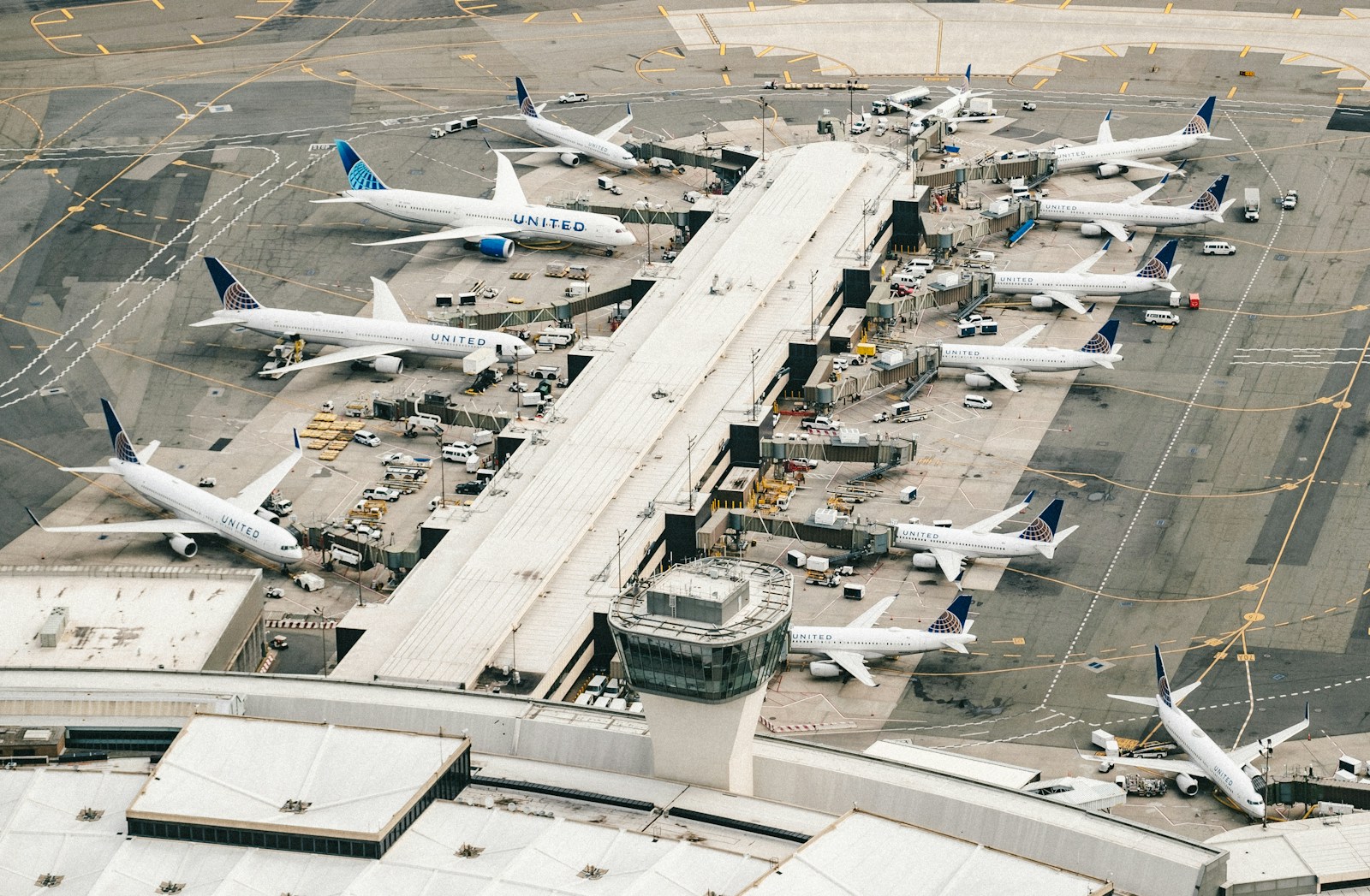
Air traffic delays cost billions of dollars and turn journeys into ordeals for passengers worldwide, prompting the UN aviation agency to push for a global fix to congested skies. Most frequent flyers recognize the experience of a plane beginning its descent only to start circling overhead instead of heading straight for the runway. This holding pattern keeps aircraft airborne until room opens up for them to land safely. Such maneuvers are symptoms of increasingly crowded skies, where a storm, a closed route, or an emergency in one location can trigger delays thousands of kilometers away. In Europe alone, air traffic management delays cost an estimated $2.3 billion or more during 2025, according to EUROCONTROL, the continent’s air navigation body. The International Civil Aviation Organization, the UN agency responsible for setting global aviation standards, wants countries to coordinate their flights much like a city synchronizes its traffic lights to prevent gridlock.
Global rollout of air traffic flow management
The proposed solution starts long before a landing takes place, using air traffic flow management to let airlines, airports, controllers, and weather services share information and make joint decisions. If an airport knows it cannot accept more aircraft for a while, it can coordinate with other departure airports to hold planes back on the ground rather than having them circle overhead. Following five days of talks convened by ICAO in Montreal, governments and the industry backed a faster global rollout of these systems. Several nations already utilize the approach, but national systems often fail to communicate effectively with one another. ICAO Secretary General Juan Carlos Salazar noted that technology alone is not enough, and information must be shared in real time across the four or five regions and different continents that a typical long-haul flight crosses. New international rules concerning flow management are scheduled for November 2030, supported by regional workshops planned for 2027.
Measurable gains and future challenges
The benefits of better coordination are already measurable across several regions. In the Americas, ICAO-supported collaborative trials saved more than 265,000 minutes of flying time—about 4,400 hours—and over $38.9 million in 2026. These trials also saved approximately 13,330 tonnes of fuel and prevented 42,160 tonnes of carbon dioxide emissions, contributing toward the goal of net-zero carbon emissions from international aviation by 2050. Meanwhile, a EUROCONTROL program in Europe avoided around 3.1 million minutes of delay between May and August 2026, saving an estimated $448 million. Looking ahead, mounting pressure comes from ICAO projections that air travel could reach 12.4 billion passengers by 2050. Additional challenges are also piling up, as conflicts force airlines to reroute around danger zones, while drones, air taxis, rocket launches, and unplanned re-entries of orbital objects all demand much closer coordination.
Source: Cosmo News Desk